
Choosing the right technology for a digital catalogue raisonné raises a lot of questions, and the answers are rarely straightforward. This page collects the questions we hear most often, with concise answers aimed at scholars, estates, and institutions at the beginning of the process. For a full breakdown of the three main approaches and how to choose between them, see our guide.
You can also take a look at the digital strategy of 118 prominent catalogues raisonnés, which contributed to the guide.
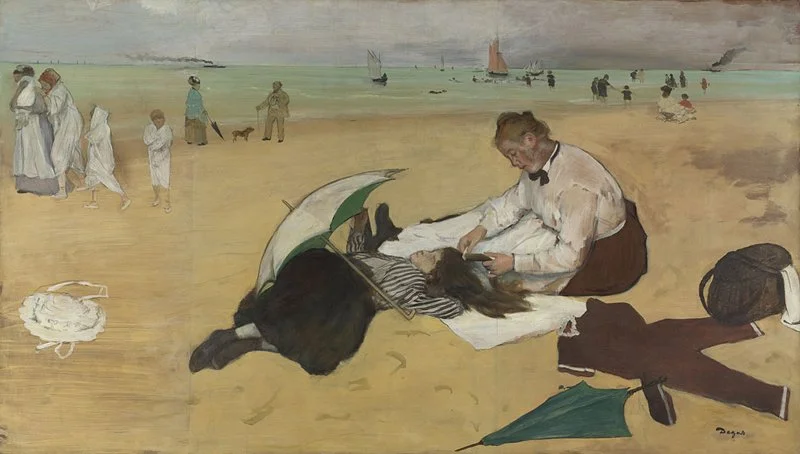
Edgar Degas, Bains de mer. Petite fille peignée par sa bonne, c. 1869-70. Oil (essence) on paper laid down on canvas, 46 x 81 cm. The National Gallery, London; in the public domain.
What software do most digital catalogues raisonnés use?
59% of the independent catalogues we surveyed use a purpose-built catalogue raisonné platform. The most common are Artifact and Navigating.art. A smaller number run on assembled solutions built around WordPress, Drupal, or Collective Access, and a handful of well-funded institutions maintain fully custom builds.
How much does it cost to build a digital catalogue raisonné?
It depends significantly on the approach. Purpose-built platforms operate on subscription models, making costs more predictable and lower upfront. Assembled solutions are cheaper than custom builds but still require development investment and ongoing maintenance budgets. Custom software typically runs into the hundreds of thousands of dollars to build, with substantial ongoing costs. Whatever approach you choose, budget for the full lifecycle, not just the launch.
What is the difference between a content management system and a collection management system?
A content management system (CMS) is software that lets non-developers publish and edit content on a website. WordPress and Drupal are common examples. A collection management system is designed to track and manage physical or digital collections within a museum or estate, handling object records, locations, condition reports, and related documentation. The abbreviations are identical, but the tools serve different purposes. Some catalogues use both; others use a collection management system that does double duty.
What should I ask a catalogue raisonné platform before signing up?
The most important questions concern your data: Does the data model work with your most complex record types? What export formats are available if you decide to leave? How easy is it to set data to private or public? Ask for realistic ten-year pricing projections, talk to other catalogues currently using the platform, and understand the platform’s funding streams before committing.
For a full list of questions to ask, see the guide.
How long does a digital catalogue raisonné take to build?
Timelines vary widely by approach and scope, as well as the amount of research that needs to be completed before launch. Custom builds can take several years. Assembled solutions typically run twelve to twenty-four months, depending on complexity. Purpose-built platforms, where much of the infrastructure is already in place, can reduce the technical timeline significantly. However, the scholarly work of entering and reviewing records takes as long as it takes, regardless of the platform.
If you're still weighing your options, our full guide walks through each approach in depth — with the questions to ask vendors, the trade-offs to weigh, and the considerations that tend to matter most over the long term.